
 AI Governance
 Data Centers
 Drones
 Climate
 Privacy
 2026 Maine Senate
 Bob Dylan

Data Center Load Growth and Utility Costs
Coverage from Houston Public Media, Utility Dive, and others
Overview
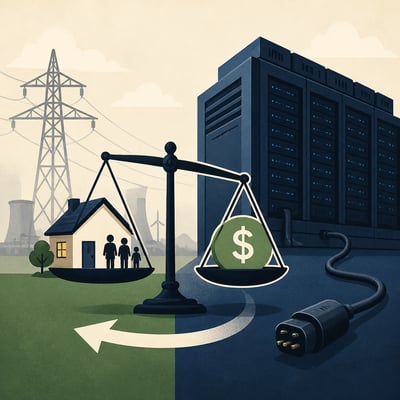
Data center growth is pushing utilities, regulators, and lawmakers to expand generation and grid capacity while tightening rules so large customers pay more of the connection and infrastructure costs. The strongest pattern is cost allocation: rate freezes, large-load tariffs, long-term contracts, and CWIP financing all appear as tools to keep residential bills from subsidizing new load. Missouri, Montana, Pennsylvania, Texas, and several other states show the same tension between economic development and ratepayer protection, while PJM and other grid-planning processes remain a major bottleneck. The topic is coherent and current, with dense signal around utility planning and policy design rather than isolated site-specific projects.
Summary
- Utilities are treating data centers as a major new load driver and are expanding generation, transmission, and interconnection planning around them.
- A repeated policy response is to make large customers pay more directly through connection charges, long-term contracts, large-load tariffs, or rate freezes tied to data-center deals.
- Many regulators and advocates are focused on avoiding residential subsidy, stranded assets, and cost overruns if power plants or lines are built ahead of confirmed demand.
- PJM Interconnection remains an important pressure point, with utilities and developers using its queue and backstop processes to secure generation for projected load growth.
- State-level approaches vary, but Missouri, Montana, Wisconsin, Oregon, Oklahoma, and Southern Company territory all show similar cost-allocation logic.
- Several utilities are reporting very large pipelines or contracts, suggesting the load-growth signal is structural rather than temporary.
- A smaller but persistent side theme is local permitting and environmental review, including concerns about water use, cooling, and community impacts.
This Topic Has Been Archived
This topic has been split into multiple separate topics.
Visit the main Topics page to see what's now available.