
 AI Governance
 Data Centers
 Drones
 Climate
 Privacy
 Bob Dylan

Congo Peatlands Release Ancient Carbon
Coverage from EurekAlert!, Technology Networks, and others
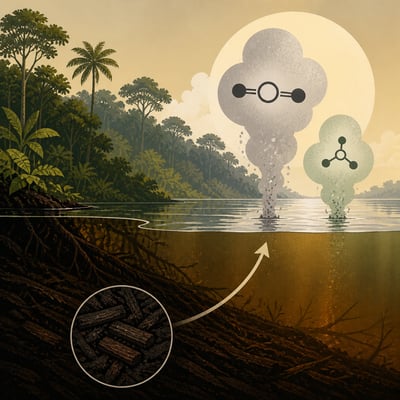
Research on Lac Mai Ndombe and Lac Tumba in the Democratic Republic of the Congo indicates that up to 40% of carbon dioxide released by these blackwater lakes comes from peat accumulated thousands of years ago.
Parallel findings link lower water levels with greater methane escape, raising questions about how drought and land-use change could alter greenhouse-gas emissions from tropical peatlands. The results point to gaps in climate models and reinforce the importance of protecting the Congo Basin’s carbon-rich wetlands.
The story has become more specific and better sourced: it now quantifies how much of the lakes’ CO2 is ancient peat carbon and adds a clearer mechanism linking lower water levels to methane release. The framing also broadens slightly to emphasize Congo Basin wetlands as a climate-modeling and carbon-accounting gap.
The story is slightly reframed from a narrow focus on blackwater lakes to a broader Congo Basin peatland carbon-source narrative, while keeping the same underlying scientific conclusion. The main update is tighter emphasis on climate-model implications and the carbon stock at risk.