
 AI Governance
 Data Centers
 Drones
 Climate
 Privacy
 2026 Maine Senate
 Bob Dylan

US AI Governance Tightens
Coverage from Washington Post, Chicago Tribune, and others
Overview
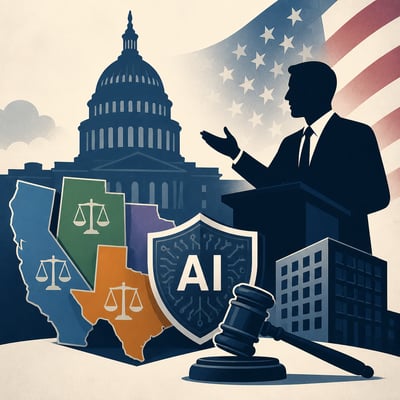
U.S. AI governance is moving toward tighter oversight through state bills, federal review processes, and procurement rules, while major labs and lobby groups push to shape the rules before they harden. The strongest current pattern is a contest between transparency-and-safety mandates and industry efforts to limit liability, avoid fragmented state laws, and steer regulation toward national standards. OpenAI, Anthropic, TechNet, and federal and state officials are the most visible actors, with Illinois, New York, California, Congress, and the White House driving the main policy moves. The cluster is coherent and current, with dense coverage of active rulemaking, lobbying, and implementation uncertainty rather than older historical material.
Summary
- State-level AI lawmaking remains the most active arena, with Illinois, New York, California, and New Jersey recurring as test beds for safety, transparency, and liability rules.
- A central divide runs between accountability-focused bills and industry-backed safe harbors or narrowed liability regimes for frontier AI developers.
- OpenAI and TechNet are visible in lobbying to shape state rules, often arguing for harmonized national standards and less fragmented liability exposure.
- The federal government is moving through executive action, voluntary review frameworks, and procurement guidance rather than a single comprehensive AI statute.
- Policy attention is broadening beyond model safety to include discriminatory use, deepfakes, youth harms, sensitive data, and government data handling.
- Enforcement and implementation remain unsettled in places like Colorado and in cross-jurisdiction privacy work, where litigation and regulatory coordination are still shaping timelines.
- International comparisons and state-versus-federal tensions are present, but the dominant signal remains domestic U.S. governance conflict.
This Topic Has Been Archived
This topic has been split into multiple separate topics.
Visit the main Topics page to see what's now available.